A site that wants to offer bike washing has five realistic options: a purpose-built bike washing machine, a pressure washer, a garden hose or bucket station, a manual brush stand, or no wash facility at all. All five can leave a bike cleaner than it arrived. Where they differ is in what each one costs you in water, staff time, risk to the bike and wastewater handling, and in what the rider experiences at your site. Below we compare them on the same seven points. The cycleWASH figures come from our own product specifications; for the other methods we keep to what holds in general, because their numbers depend on the equipment and on the person using it.
The five options
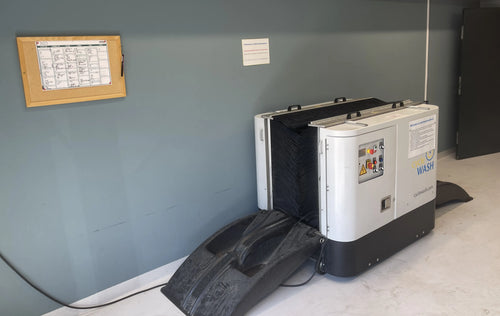
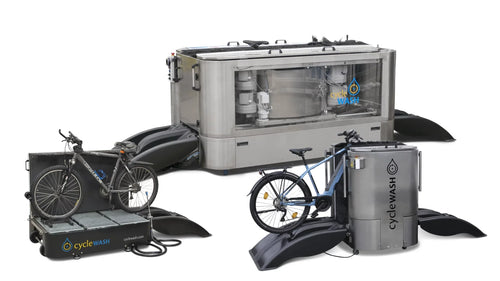
- A cycleWASH machine. The semi-automatic Mini (Mini Basic or Mini Platinum), the fully automatic Pro, or the manual self-service mini STATION, where riders wash the bike by hand on a platform and dry it with LuftWASH compressed air. All are made in Germany, DEKRA-tested and CE-compliant.
- A pressure washer. A mains-powered high-pressure lance, usually on a hard standing with a drain.
- A garden hose or bucket station. A tap, a hose and a few brushes, or buckets where there is no tap.
- A manual brush stand. A stand that holds the bike while someone brushes it down by hand, dry or with a bucket of water.
- No wash facility. Riders clean their bikes at home, or not at all.
Bike wash methods compared
The short version first, one row per question a site operator asks. The detail follows below the table.
| What you compare | cycleWASH machine | Pressure washer | Hose or bucket | Brush stand | No facility |
|---|---|---|---|---|---|
| Water per wash | Approx. 3 L in ECO mode (closed circuit); around 12 L in STANDARD mode | Depends on the pump and how long the lance runs | A hose runs continuously, typically 10–20 L a minute; a bucket, whatever it holds | Little or none | None at your site |
| Risk to bearings, electrics, batteries | Low: soft brushes and low-pressure spray on the Mini and Pro (Pro below 1 bar) | High if a narrow jet is held close to bearings, seals or connectors | Low, unless a jet nozzle is used close up | Low; grit on a dry brush can mark paint | None at your site; dirt left on wears the drivetrain |
| Staff needed | None on site (Mini, Pro); self-service (mini STATION) | Staff, or riders under supervision | Staff or the rider | Staff or the rider | None |
| Time per bike | About 3 min (Mini); 2–5 min (Pro); the rider's own pace (mini STATION) | Depends on the person and the dirt | Depends on the person and the dirt | Depends on the person and the dirt | Not applicable |
| Wastewater | Filtered and recirculated in ECO mode; drain connection required | Single pass to the drain | Single pass to the drain; buckets emptied by hand | Dry dirt to sweep up | None |
| Rider experience | Roll on, wash, roll off; optional card or phone payment and drying | Fast, but the rider has to know what not to aim at | Familiar, but wet and slow | A quick tidy-up | The dirt goes home with the bike |
| Cost profile | Capital purchase, low running cost, financing direct from cycleWASH | Low purchase price; the cost sits in staff time and risk | Lowest equipment cost; the cost sits in water and time | Low cost, limited result | Nothing spent, no service offered |
Water per wash
A cycleWASH machine in ECO mode washes from a closed water circuit with filtration and uses approx. 3 litres per wash, on the Mini, the Pro and the mini STATION alike. The Mini and the Pro need no fixed fresh-water supply in ECO mode: the tank can be filled by hand. In STANDARD mode the machine draws fresh water for each wash instead, around 12 litres.
An open hose has no such limit: it runs for as long as someone holds it. A typical household garden hose delivers somewhere in the range of 10 to 20 litres a minute, depending on mains pressure, hose and nozzle, so a few minutes of rinsing is already tens of litres. A bucket station caps the volume at what the buckets hold, at the price of washing the last part of the bike with dirty water. A pressure washer usually moves less water per minute than an open hose; the total depends on its pump and on how long the lance runs. A brush stand uses little or no water. No facility uses none at your site, because the washing happens somewhere else or not at all. For the water side in more depth, see how much water a bike wash saves compared with a hose.
Damage risk: bearings, electrics and e-bike batteries
Water does the most harm where it is forced in: past the seals of hubs, headsets and bottom brackets, and into connectors, displays and battery contacts. That makes pressure the variable that matters. The Mini and the Pro clean with soft EASYClick brushes and a low-pressure spray designed for e-bikes and carbon frames; the Pro runs at an operating pressure below 1 bar. Separated brush zones keep chain oil and grease off disc rotors and pads.
A pressure washer is fast and, in careful hands with a wide fan nozzle and some distance, can be used on a bike. The risk is a narrow jet held close to a bearing, a seal or an electrical connector, and e-bike drive-system manuals commonly warn against high-pressure cleaning for that reason. On a public site that risk sits with whoever holds the lance. A hose at normal mains pressure is gentle, unless someone fits a jet nozzle and works close up. A dry brush is safe for electrics, but grit caught in the bristles can mark paint. With no facility there is no risk at your site, though dirt left on the chain and cassette wears the drivetrain.
Whatever the method, follow the e-bike maker's advice on whether to remove the battery before washing. More in washing e-bikes safely: what to know.
Staff needed and time per bike
The Mini and the Pro run with no staff on site. The rider rolls the bike on, starts the wash and rolls it off again: a Mini wash takes about three minutes, a Pro wash cycle 2–5 minutes depending on the program. With the optional contactless payment system the machine takes payment itself, so it can stay open for as long as the site is. The mini STATION is manual self-service with no attendant: riders wash the bike by hand and dry it with LuftWASH, at their own pace.
A pressure washer, a hose or a brush stand needs a person to do the washing: a member of staff, or the rider if you open it to the public, in which case someone usually has to set the rules and keep an eye on it. How long a wash takes depends on that person and on how dirty the bike is. In our own workshop calculations we assume 30 minutes for a hand wash by staff; that is an indicative figure from partner operations, not a measured standard. No facility needs no staff, and offers no service.
Wastewater handling
In ECO mode a cycleWASH machine filters its wash water and circulates it again instead of sending it to the drain after one pass. A drain connection is still required in every case, and an external oil separator is available as an option on the Pro. STANDARD mode needs a ½″ fresh-water connection and a 1″ drain.
A hose or a pressure washer is single-pass: every litre leaves the bike carrying chain lube, brake dust and road grime to wherever it runs off. Buckets have to be emptied somewhere suitable, and a brush stand leaves dry dirt to sweep up. Rules on where washing run-off may go differ from place to place, so check them with your local authority before you plan any wash point.
What the rider experiences
At a Mini or a Pro the rider rolls on, washes and rolls off. Options add payment by card or phone and drying with LuftWASH compressed air. At a mini STATION the rider does the washing, on a platform built for it, and finishes with LuftWASH.
A pressure washer is quick, but the rider has to know what not to aim at. A hose or a bucket is familiar, and usually wet, slow and without a way to dry the bike. A brush stand is good for a quick tidy-up rather than a clean. With no facility the dirt goes home with the bike, into the bike room or onto the train.
Cost profile
A cycleWASH machine is a capital purchase, quoted per model and configuration; current list prices are on the shop pages for the Mini Basic, Mini Platinum, mini STATION and Pro. Running costs are a few litres of water per wash, electricity and care products, plus the annual maintenance contract (the Mini is sold only with one) and wear parts such as brushes and filters. The Mini Basic draws 1.1 kVA in ECO mode and 0.55 kVA in Standard mode on a 230 V supply; the Pro runs on 400 V three-phase, or on solar with 230 V. The mini STATION needs no mains power wherever compressed air at 6–8 bar and at least 160 l/min is available. cycleWASH finances its machines directly: a 20% down payment with the order, then 24 monthly instalments.
A pressure washer, a hose or a brush stand costs little to buy. Their cost sits elsewhere: staff time for every wash, water for every rinse and, with the pressure washer, the risk of damage to a customer's bike. No facility costs nothing, and gives riders one reason fewer to choose your site.
Which fits your site
- Steady demand and nobody free to wash: the Mini. Semi-automatic and compact, and in ECO mode it needs no fixed fresh-water supply. Bike shops, workshops, hotels, campsites and events.
- High volume and long hours: the Pro. Fully automatic, built for intensive use, and roomy enough for XL e-bikes up to 2.1 m long. Fleets, rental hubs and busy public sites.
- A permanent open-air site without a power point: the mini STATION. Stainless steel, manual self-service, no mains power where compressed air is available, and it can be upgraded to a Mini Basic later.
- Occasional washes by trained staff: a pressure washer or a hose can be enough, provided someone owns the job and knows what not to spray.
- Few dirty bikes and no space: no facility may be the honest answer for now.
To see what a machine would earn at your volume and wash price, run your own numbers in the ROI calculator. For the choice between the machines themselves, read Mini vs Pro vs OASIS: which cycleWASH fits your site.
Frequently asked questions
How much water does a bike washing machine use compared with a hose?
A cycleWASH machine uses approx. 3 litres per wash in ECO mode, from a closed circuit, and around 12 litres in STANDARD mode. A typical household garden hose runs at somewhere around 10 to 20 litres a minute, so an ECO wash uses less water than a single minute of an open hose.
Is a pressure washer safe for e-bikes?
It can be used with care, but it carries the most risk of the five methods for bearings, seals and electrics, because a narrow jet held close forces water past the seals. E-bike drive-system manuals commonly warn against high-pressure cleaning. The cycleWASH Mini and Pro use soft brushes and a low-pressure spray instead; the Pro runs below 1 bar.
Does a bike wash need staff?
A pressure washer, a hose or a brush stand needs someone to do the washing. The cycleWASH Mini and Pro run with no staff on site, and with the optional contactless payment system they take payment themselves. The mini STATION is self-service, with no attendant.
What does a site need for a cycleWASH machine?
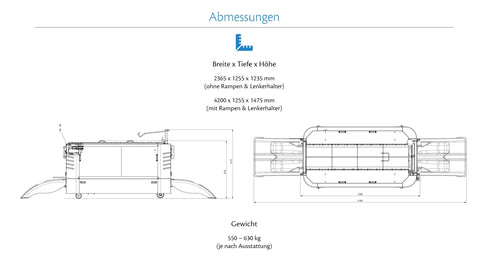
A drain connection, in every case. In ECO mode the Mini and the Pro need no fixed fresh-water supply; in STANDARD mode they need a ½″ fresh-water connection and a 1″ drain. The Mini Basic runs on a standard 230 V supply, the Pro on 400 V three-phase or on solar with 230 V. The mini STATION needs no mains power where compressed air at 6–8 bar and at least 160 l/min is available. Allow for the ramps: with them the Mini Basic is 3340 mm long, the Mini Platinum 3100 mm and the Pro 4200 mm.
Related reading
- Self-service vs attended bike wash: which earns more
- How a bike washing machine works, cycle by cycle
- Why bike rooms without a wash station are losing tenants
Next step
Tell us your site, your expected wash volume and the space you have, and we will tell you which method fits, and quote the machine if it is one of ours. Contact us, or start with the ROI calculator.