This campus bike wash station case study answers a question facilities teams keep asking: how do universities handle bike cleaning at scale? At a 250-bike campus, the answer was a single self-service wash station that students operate themselves. No staff rota, no hosepipe in the bike shed, no mud tracked into halls. One machine, sited near the main cycle parking, handled the volume that a manual setup never could. The result was cleaner bikes, a tidier campus, and a measurable cut in the informal cleaning that was clogging drains and damaging frames.
The problem: 250 bikes, no system
The campus had roughly 250 bikes in regular use across term time. Cleaning was ad hoc — students using buckets, garden hoses, or nothing at all. That created three issues: blocked drains from grit and grease, corroded frames from poor cleaning, and a constant maintenance burden on grounds staff. Manual cleaning does not scale. Every bike washed by hand is staff time spent, water wasted, and a queue forming.
The approach: one self-service station
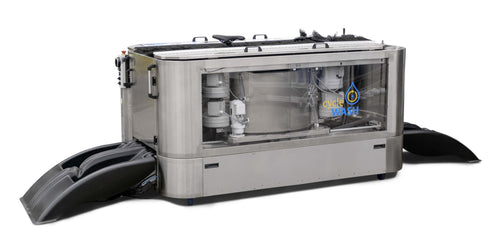
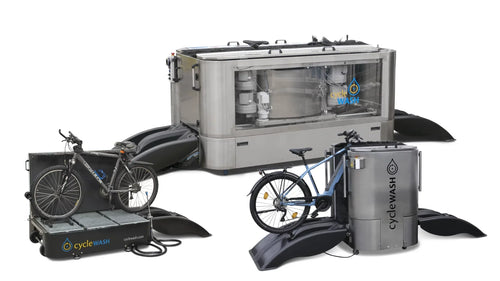
The university installed a single cycleWASH Mini Station at the busiest cycle hub. The Mini Station is the entry point in the range — a self-service bike wash designed for exactly this kind of shared-use environment. Students run a wash cycle themselves; the machine handles water, detergent dosing, and drainage in a contained unit. Made in Germany, DEKRA/CE certified, it was specified for unsupervised public use from day one.
Siting mattered. Placing the station where bikes already congregated meant uptake was immediate. No behaviour change campaign was needed — the machine was simply there, at the point of need.
How universities handle bike cleaning at scale
The short version: you move from manual, one-bike-at-a-time effort to a self-service station that students operate without supervision. A single machine absorbs the throughput of a 250-bike population because each wash is fast, contained, and user-driven. Grounds staff stop being the bottleneck. Water and detergent are controlled by the machine rather than wasted by a running hose. Drains stay clear because grit is captured at source.
cycleWASH brings real scale behind this approach: 35 granted IP rights, 350+ units sold, more than 1 million bikes washed, deployments in 24+ countries over roughly ten years. The engineering is proven in exactly the high-traffic, unsupervised settings universities operate.
The numbers
For a campus, the Mini Station starts at EUR 17,500. Larger or higher-spec needs scale up — Mini Basic at EUR 25,990, Mini Platinum at EUR 29,990, and the Pro range from EUR 45,000 for sites with heavier throughput. cycleWASH sells outright at the list price, ex works Cologne (EXW). Payment: online orders are paid in full at checkout; orders placed by quote or purchase order pay two-thirds with the order and the remaining third before delivery. From stock where available; otherwise ready 3 weeks after the order payment is received. Typical payback lands in the 15–26 month range once you account for reclaimed staff time and reduced drain and frame maintenance.
What scaled
Three outcomes stood out. First, throughput: one unsupervised machine served the full 250-bike population without queuing problems. Second, cleanliness: frames lasted longer and the campus looked maintained. Third, infrastructure: drains stopped silting up because grit was captured rather than flushed. For multi-site institutions, cycleWASH also works through regional partners who handle specification, installation, and support — useful when a university runs several campuses under one estates team.
Take the next step
To scope a campus bike wash station for your site, start with the Mini Station and request a specification for your bike count and parking layout.