Yes — a city can add bike wash public infrastructure to an existing mobility hub. Bike parking, charging points, and repair stations are now standard at transit interchanges; a public bike wash station is the logical next module. A cycleWASH unit installs as a self-contained machine, requires no specialist construction, and can be sited alongside existing cycle facilities. This article sets out how municipalities specify, fund, and operate such a station.
Why bike wash belongs in a mobility hub
Mobility hubs concentrate cycling demand: commuter parking, bike-share docks, e-bike charging. A washing station extends the dwell-time services already provided and addresses a practical gap — riders arriving with mud, road salt, or winter grime have nowhere to clean a bike before storage or onward transit. Regular cleaning also extends drivetrain and frame life, which matters for shared fleets and municipal e-bike programmes.
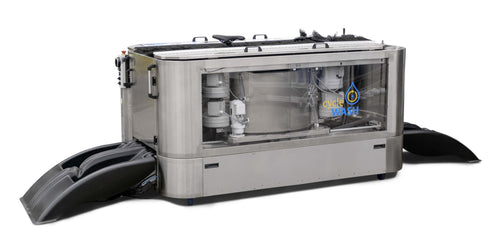
cycleWASH machines are professional bicycle washing systems — not consumer hose-downs. They are built for repeated public use, with controlled water consumption and a fixed, supervised wash cycle (Waschprogramm).
What a city actually installs
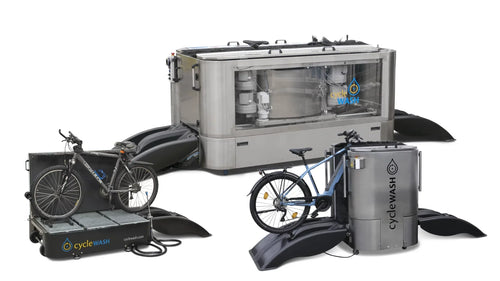
The core options for a hub:
- Mini Station — entry public unit, EUR 17,500.
- Mini Basic — EUR 25,990.
- Mini Platinum — EUR 29,990.
- Pro — from EUR 45,000, for high-throughput or multi-bay sites.
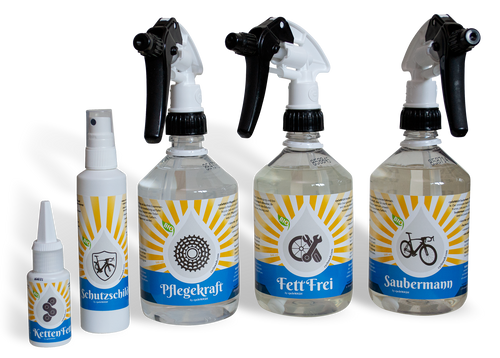
Larger sites can add LuftWASH drying and stock Care products for retail or vending alongside the wash.
All cycleWASH machines are Made in Germany and DEKRA/CE certified — relevant for municipal procurement, which typically requires documented conformity for publicly installed equipment.
Can a city add a public bike wash station? — the short answer
Procurement-wise, yes, and the path is straightforward. The unit is a certified product, not a bespoke build, so it slots into standard capital or service-equipment budgets. Siting needs a level surface, water supply, drainage, and power — the same utilities already present at most staffed or serviced mobility hubs. No planning-heavy civil works are required for the Mini range.
Cost, payment terms, and payback
A station does not have to be a pure cost centre. Operators can meter usage, integrate payment, or fund it as a service amenity. cycleWASH sells outright at the list price, ex works Cologne. Payment: online orders are paid in full at checkout; orders placed by quote or purchase order pay two-thirds with the order and the remaining third before delivery. From stock where available; otherwise ready 3 weeks after the order payment is received. Where a station carries paid or sponsored usage, typical payback is 15–26 months.
The track record behind the equipment: cycleWASH (CW Cleaning Solutions GmbH, Köln) holds 35 granted IP rights, has sold 350+ units, washed over 1 million bikes, and operates in 24+ countries across roughly a decade of production. For a municipality, that is a deployed, proven platform rather than a pilot product.
Specifying and rolling out
A practical sequence for a city team:
1. Identify the hub and confirm utilities (water, drainage, power, level surface). 2. Select the unit to match expected throughput — Mini for single sites, Pro for interchange-scale demand. 3. Decide the funding model: capital purchase or service/sponsored. 4. Confirm certification requirements are met (DEKRA/CE documentation supports tender compliance).
Many municipalities deliver these projects with regional installers and operators. cycleWASH works through a network listed on its partners page, which can support siting, installation, and ongoing service.
To scope a specific hub, request a quote or arrange a demonstration via contact us.
Add a certified, German-made wash station to your mobility hub — start with the Mini Station at EUR 17,500, or speak to us about Pro for interchange-scale sites.