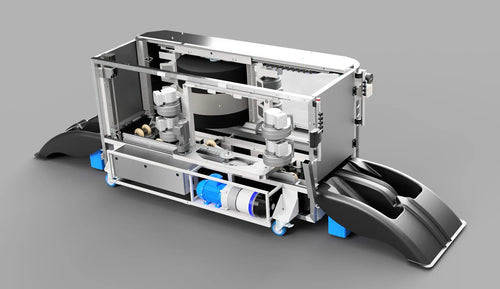
"You put a bike in a washing machine?" It's the first reaction most people have — and the answer is yes, but nothing like a household machine. Here's how a bike washing machine works, cycle by cycle.
Step 1 — Load and start
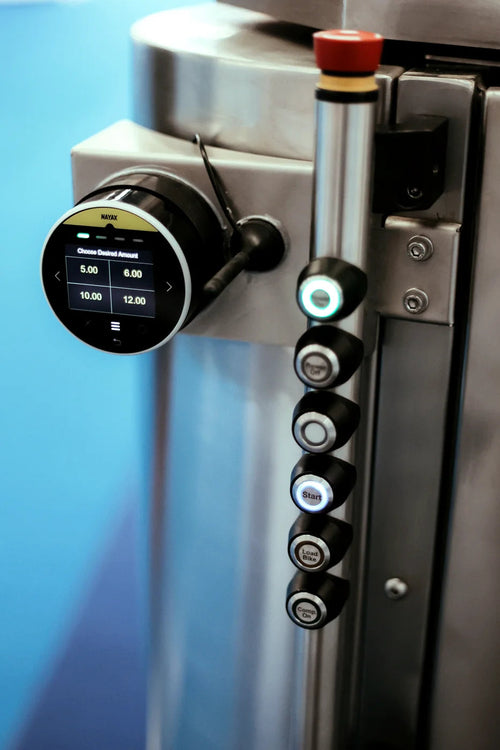
The rider rolls the bike into the wash bay and starts the cycle (coin, card, app, or attendant). The bike stays upright and supported throughout — no disassembly, no lifting.
Step 2 — Pre-soak
A controlled spray loosens mud, road grime and trail dirt. This is the step that makes the difference: softening debris first means the wash never has to blast at high pressure near bearings, seals or electronics.
Step 3 — Wash
Brushes and a measured detergent flow clean the frame, drivetrain and wheels. Because the geometry and pressure are engineered for bikes — the result of 24 granted patents and a million-plus wash cycles of refinement — it's thorough without the risk a careless pressure-washer poses to hubs, bottom brackets and e-bike electronics.
Step 4 — Rinse
Clean water clears detergent and loosened dirt, leaving a genuinely clean bike rather than a smeared one.
Step 5 — Dry (with LuftWASH)
Washing is only half the job. Leftover moisture invites corrosion on a drivetrain. cycleWASH's LuftWASH drying stage removes standing water so the bike leaves ready to ride — and protected. See our care products for the finishing detail.
Why not just use a hose?
A hose (or worse, a pressure washer) uses more water, takes longer, and drives water into bearings and seals. A purpose-built machine uses less water, cleans more consistently, and is gentle where it counts — which is exactly why campsites, bike parks, shops and cities choose one over a tap and a brush.
Curious which model suits your site? Compare the range or talk to us.